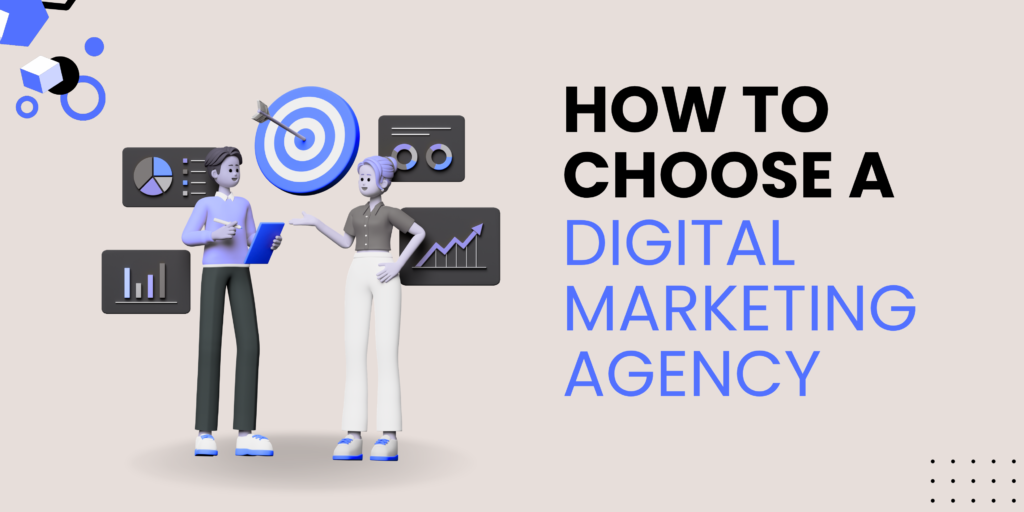
Three things to look for when choosing a digital marketing agency: They can show you real results they’ve delivered for businesses like yours. They’re up-front about what things will cost and who will own your accounts. They can explain how their strategy keeps up with the way searches are changing, including AI tools like ChatGPT and Google’s AI Overviews. Everything else is a diversion from those three questions.
That sounds easy. In reality, most business owners end up picking based on a slick pitch deck only to find out 6 months later that nothing was tracked, nobody owns the results, and the custom strategy was the same package sold to every client. This guide will tell you exactly what to look for before you sign anything.
Figure Out What You Actually Need First
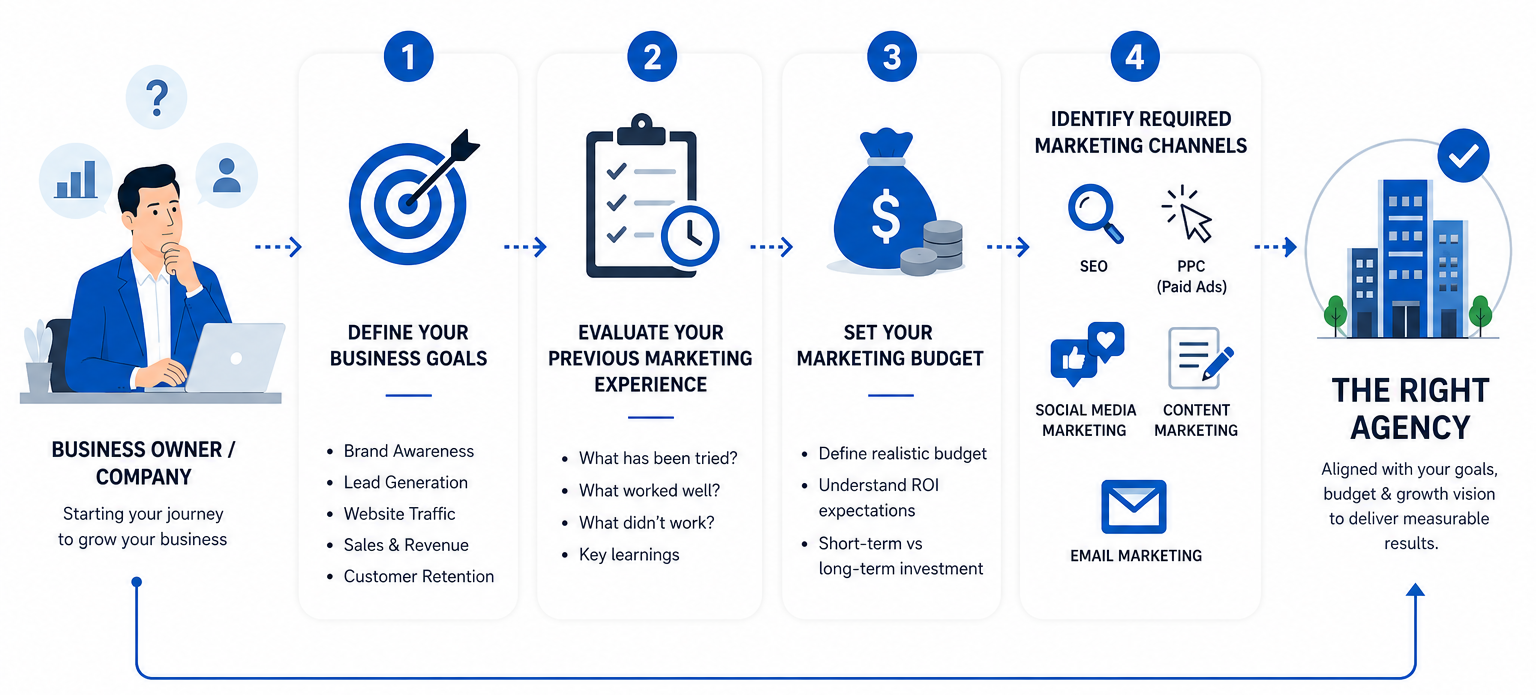
Before you make a sales call, take a moment to understand your own situation. Agencies will always have an answer for what you should invest in. That answer should come from your business, not from what they happen to offer.
Start by asking yourself:
- What is the real goal? Are you looking for website traffic, more phone calls, more online sales, or just better brand visibility? Each of these goals points to kinds of services.
- What have you already tried? If you’ve never run a Google Ads campaign, you don’t have any baseline data yet. That changes what success looks like in your month.
- What is a realistic monthly budget? Not the amount you wish you could spend. The amount you can actually commit to for at least three to six months without stress.
- Do you need one channel or several? A business that needs SEO, paid ads, and social media all working together is very different from a business that only needs one service done well.
Going into agency meetings with these answers already in mind makes it much easier to tell when a pitch doesn’t actually fit your business.
Top Questions to Ask Every Agency Before You Hire Them
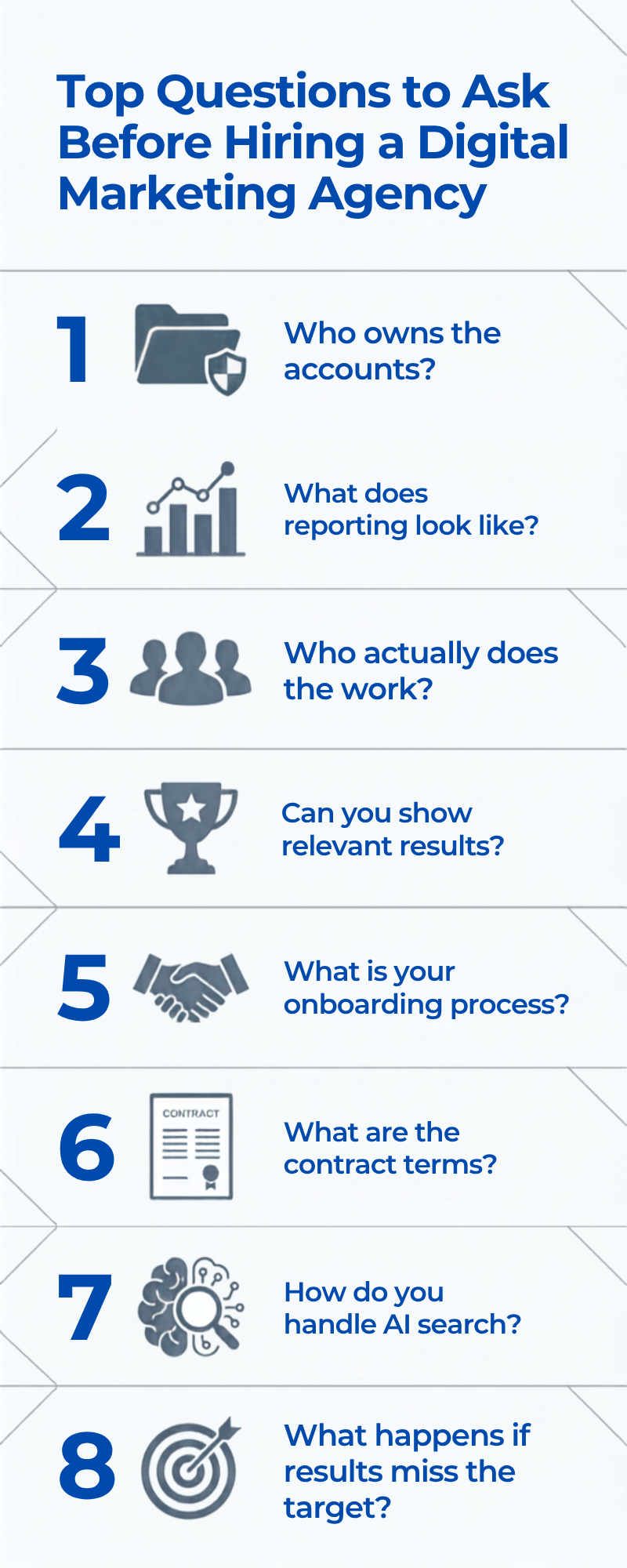
A strong agency will give specific answers. A weak one will become vague, defensive, or just go back to a pitch they use for everyone.
Who owns the accounts once we are working together?
Your Google Ads account, Google Analytics, Google Business Profile, and any ad accounts should be set up under your business, with the agency given access. Not the other way around. If the agency insists on building everything under its login, you will have no data and no history if you ever leave.
What does reporting actually look like?
Ask to see a sanitized example of a client dashboard or report. Not a description of one. You are checking whether the numbers are things that matter to your business (leads, calls, revenue) or things that are easy to report (impressions, followers, engagement).
Who does the work?
Some agencies do everything in-house. Others resell work from freelancers or white‑label subcontractors with oversight. Neither is automatically wrong. You should know which one agency you are getting, since it affects quality control and how quickly issues get caught.
Can you show results for a business like mine?
Case studies from a different industry or business size tell you less than you would think. Ask specifically for examples from businesses similar to yours in size, budget, or sector.
What’s your onboarding process?
A serious agency starts with an audit. Of your website, current rankings, competitors, and past marketing performance. Before recommending anything. If an agency is ready to pitch a strategy on the first call before it has looked at your business, that is usually a sign that the strategy is not actually custom.
What are the contract terms? How do we exit?
Ask directly: what is the minimum commitment, what is the cancellation process, and is there a fee to leave? Reasonable agencies are upfront about this. Long lock‑in periods and vague off‑boarding terms are usually there to make performance harder to escape, not to protect a good relationship.
How do you handle AI search and AI overviews?
This is a question, but an important one. A meaningful share of searches now show an answer at the top of Google before any organic result, and more people are asking ChatGPT or Perplexity directly instead of searching Google at all. An agency that cannot explain how its content and SEO approach accounts for this is working from a playbook.
What happens if results don’t hit the target?
Listen for an answer about what gets adjusted and on what timeline. Not a reassurance that it just takes time. Good agencies build in checkpoints. Know what to change when something is not working.
Red Flags That Should Make You Walk Away
Some warning signs are consistent enough across the industry that they’re worth memorizing:
- “Guaranteed #1 rankings” or promises of results within days. No agency controls Google’s algorithm. Anyone guaranteeing a ranking position is either inexperienced or planning to use tactics that risk a penalty later.
- They pitch a package before asking about your business.
- You can’t get access to your accounts. This is one of the signs of an agency built to trap clients rather than earn repeat business.
- Answers about where ad spend actually goes. For PPC specifically, you should always be able to see how much went to the ad platform versus the agency’s management fee.
- Heavy reliance on backlink volume as the SEO strategy without a conversation about link quality or relevance. Backlink practices that were common a decade ago can now hurt rankings.
- They can’t produce a real client reference. Only offer written testimonials with no way to verify them.
What Should It Actually Cost?
Pricing varies widely by service, business size, and how competitive your market is, so treat any number you see online as a starting point for a conversation, not a quote. As a shape:
- SEO and content marketing are typically billed monthly as an ongoing service since results build over months rather than appearing instantly.
- PPC (Google Ads, paid social) usually includes a management fee on top of your actual ad spend. Make sure both numbers are broken out clearly.
- Social media management pricing depends heavily on how many platforms and how much original content (photo, video) is involved.
- Website design is often a project‑based cost, though ongoing maintenance is usually a smaller monthly add‑on.
Get quotes from at least two or three agencies before deciding. A wide gap between quotes is normal. It usually reflects differences in scope, not just markup.
Full-Service Agency or Specialist? How to Decide
If you only need one channel handled well. Say, Google Ads for a seasonal promotion. A specialist can be the faster, more focused choice.
But if your goal is visibility (more traffic, more leads, a stronger brand presence), a full‑service digital marketing agency that runs SEO, PPC, content marketing, social media, and website design under one roof has a real advantage: your channels are built to work together instead of competing for the same budget and reporting to different playbooks. It also means one team, not five, has context on what is actually driving results.
Quick Checklist Before You Sign
- You have defined your goal, budget, and timeline before taking sales calls
- You have asked all 8 questions above. Gotten specific (not vague) answers
- You will retain ownership of all accounts, logins, and data
- You have seen a reporting example, not just a description of one
- Contract terms and cancellation policy are in writing before you sign
- Agency has asked about your business before pitching a strategy
- Agency can speak specifically to how it handles AI search visibility, not just traditional rankings
- You have compared at 2‑3 quotes
Frequently Asked Questions
How long should I commit to a digital marketing agency?
Most agencies ask for a 3 to 6 month commitment since SEO and content marketing need time to show meaningful results. Be cautious of anything requiring a 12‑month lock‑in for services. Month‑to‑month after the initial term is a reasonable ask.
Is an agency ever the better choice?
Sometimes, but treat low pricing as a question, not a win. Find out what is actually included. A low monthly fee sometimes means a volume of work, outsourced execution, or a more limited scope than a competing quote.
Should I hire one agency or separate specialists for SEO, PPC and social?
Either can work. Separate specialists can bring expertise in one channel; a full‑service agency makes it easier to keep strategy, budget, and reporting consistent across channels. The right choice depends on how much coordination you are willing to manage yourself.
Do I need an agency or can I work with one remotely?
Location matters less than it used to. Most agency work. SEO, ads, content, social, reporting. Happens remotely regardless of where the team’s based. What matters more is whether the agency understands your market and customers.
Ready to see what a strategy built for your business, not a generic package, actually looks like? Get a free audit and see exactly where your current marketing stands.