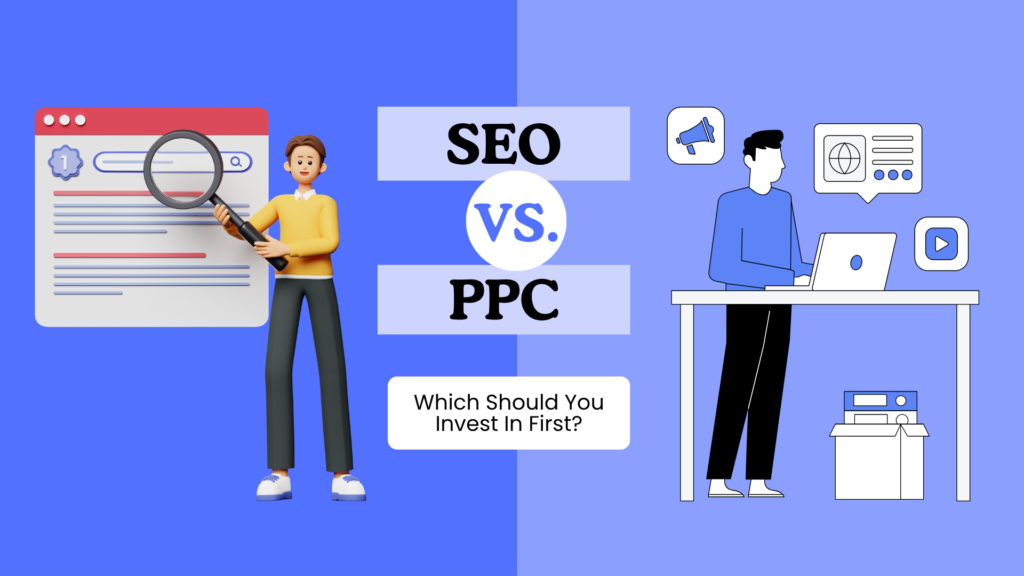
If you need leads fast, start with PPC. If you can invest for the next 6-12 months and want a channel that keeps producing results without ongoing ad spend, start with SEO. Most businesses eventually need both, so the real question is just which one comes first, given your budget, timeline, and website today.
This isn’t a which is better question. SEO and PPC solve different problems on different timelines. Here’s how to figure out which one your business needs right now.
What Each One Actually Is
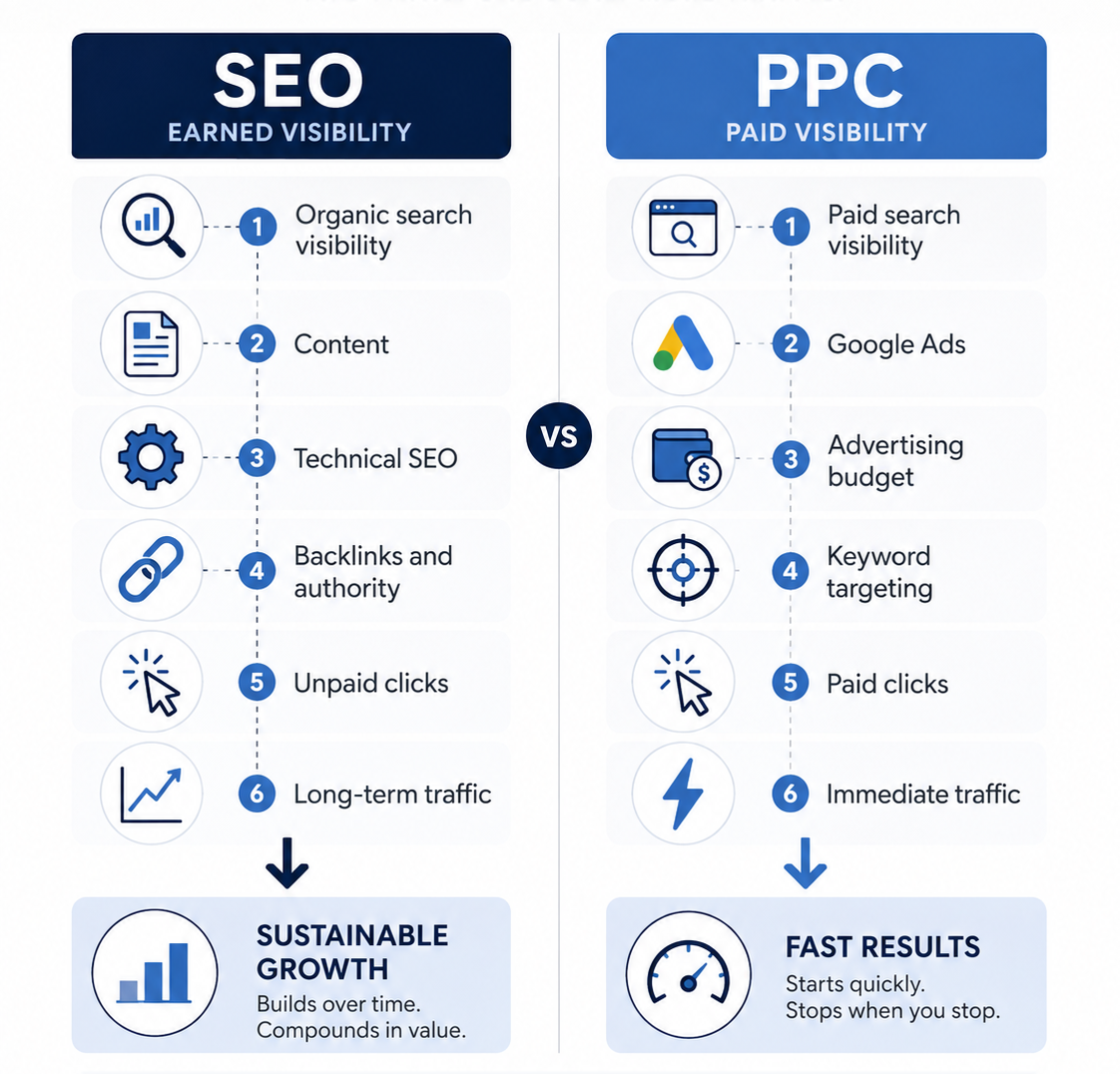
SEO (Search Engine Optimization) is the process of improving your website so it ranks in Google’s unpaid, organic results. It covers your on-page content, technical site health, local optimization (your Google Business Profile and citations), and off-page authority (backlinks). You don’t pay per click; you invest in the work that earns the ranking.
PPC (Pay-Per-Click advertising), most commonly Google Ads, puts your business at the top of search results immediately. You choose keywords, set a budget, and pay each time someone clicks your ad. The moment you stop paying, the traffic stops.
The Core Trade-Off: Speed vs. Compounding Value
This is the entire decision in one sentence: PPC buys you speed, SEO builds an asset.
A well-built PPC campaign can start generating leads within a day or two of launching. SEO typically takes 3-6 months to show meaningful movement, with the strongest results usually appearing after 9-12 months.
But that timeline works in reverse for cost. PPC traffic stops the instant your budget does, you’re renting visibility, not building it. SEO traffic tends to compound: content and rankings you build this year keep working next year without new spend, and the cost of maintaining a ranking is generally far lower than the cost of building it. Many businesses find that once local SEO rankings mature, the cost per lead settles meaningfully below what they’re paying per lead through Google Ads in the same category, though this varies a lot by industry and competitiveness.
When PPC Should Come First
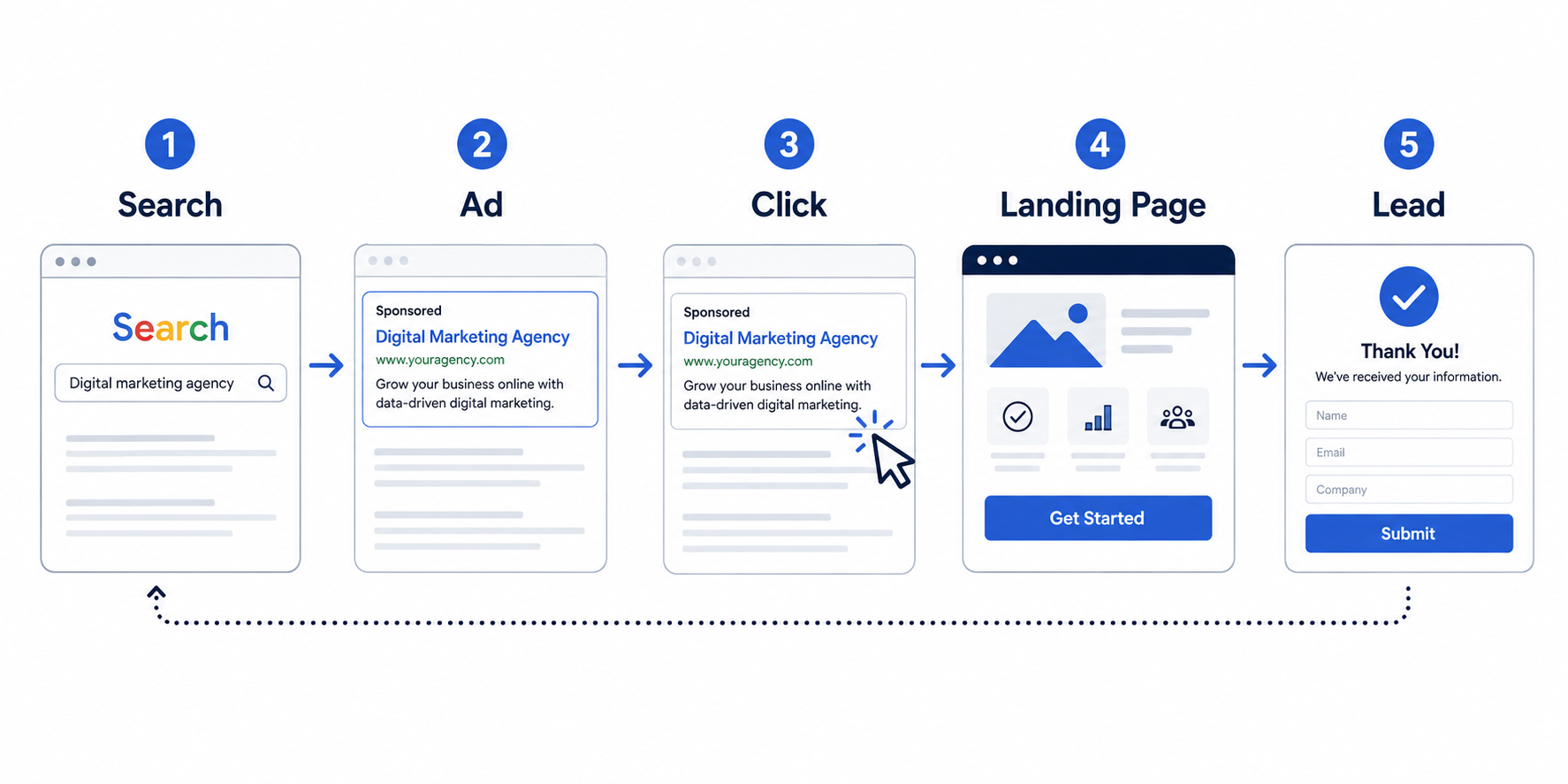 Choose PPC as your starting point if:
- You need revenue now. A new business without existing rankings or content history can’t out-wait a competitor who’s already ranking organically.
- You’re testing a new market, service, or offer. PPC gives you fast, measurable feedback on whether an offer actually converts, before you invest months building organic content around it.
- Your website doesn’t have much content or authority yet. SEO needs something to rank: if there’s nothing there, PPC can generate traffic while that foundation gets built.
- You’re running a limited-time promotion. SEO isn’t built for short-term urgency; PPC is exactly built for it.
- You want keyword and messaging data before committing to SEO. A small, targeted PPC campaign reveals which keywords and offers actually convert; that data reduces the guesswork in deciding what to build SEO content around later.
When SEO Should Come First
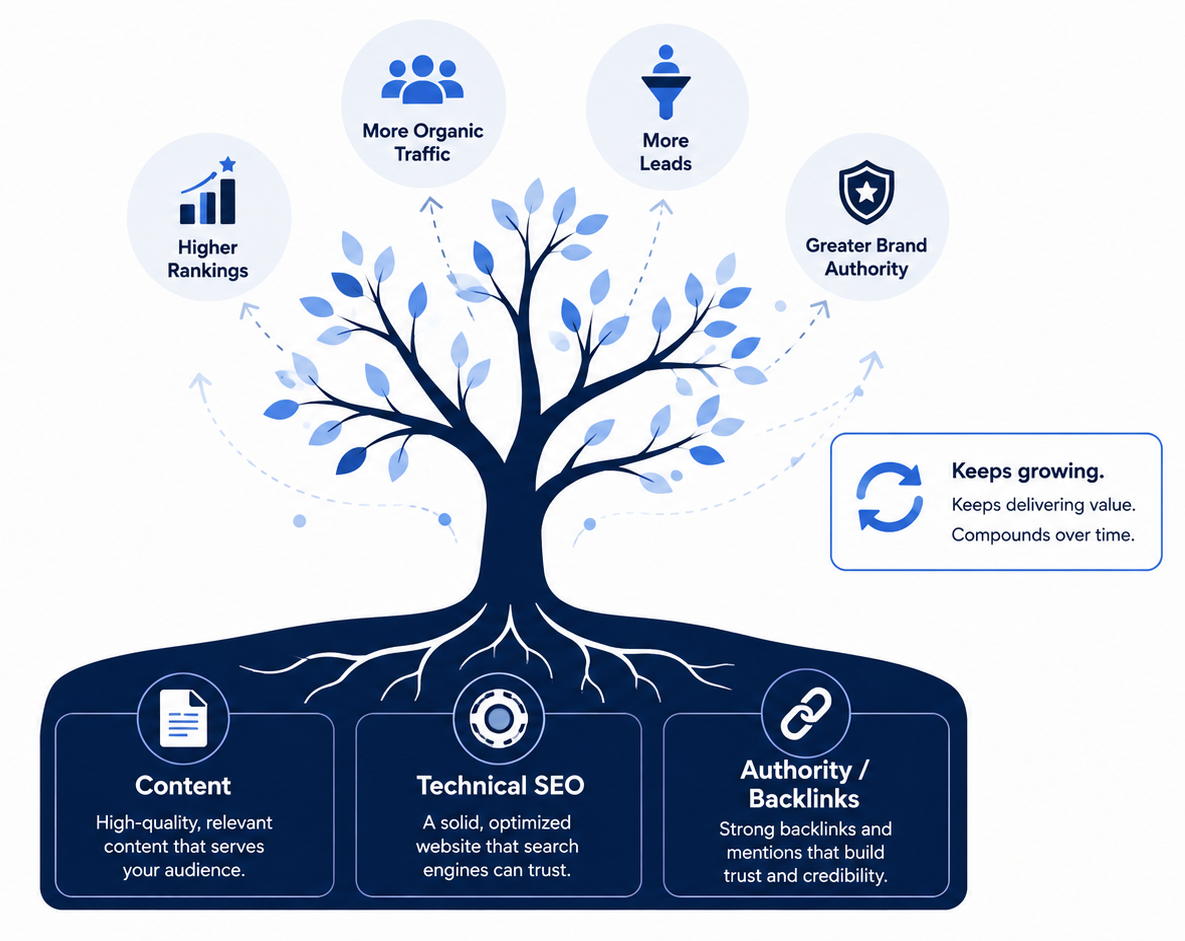
Choose SEO as your starting point if:
- You can wait 6+ months for meaningful results and want a channel with a lower long-term cost per lead.
- Your competitors already dominate the organic results, and you need to start closing that gap now; the earlier you start, the earlier you catch up.
- Your customers research heavily before buying. SEO captures someone throughout their entire research process, not just the moment they’re ready to click an ad.
- Your website already converts reasonably well. If your site is slow, thin, or confusing, fix that first; sending PPC clicks (which you’re paying for) to a page that doesn’t convert is the fastest way to waste a budget.
- You’re in a category people research locally over time: restaurants, home services, healthcare, and similar businesses where trust matters and people often check multiple sources before choosing.
Comparing the Real Cost
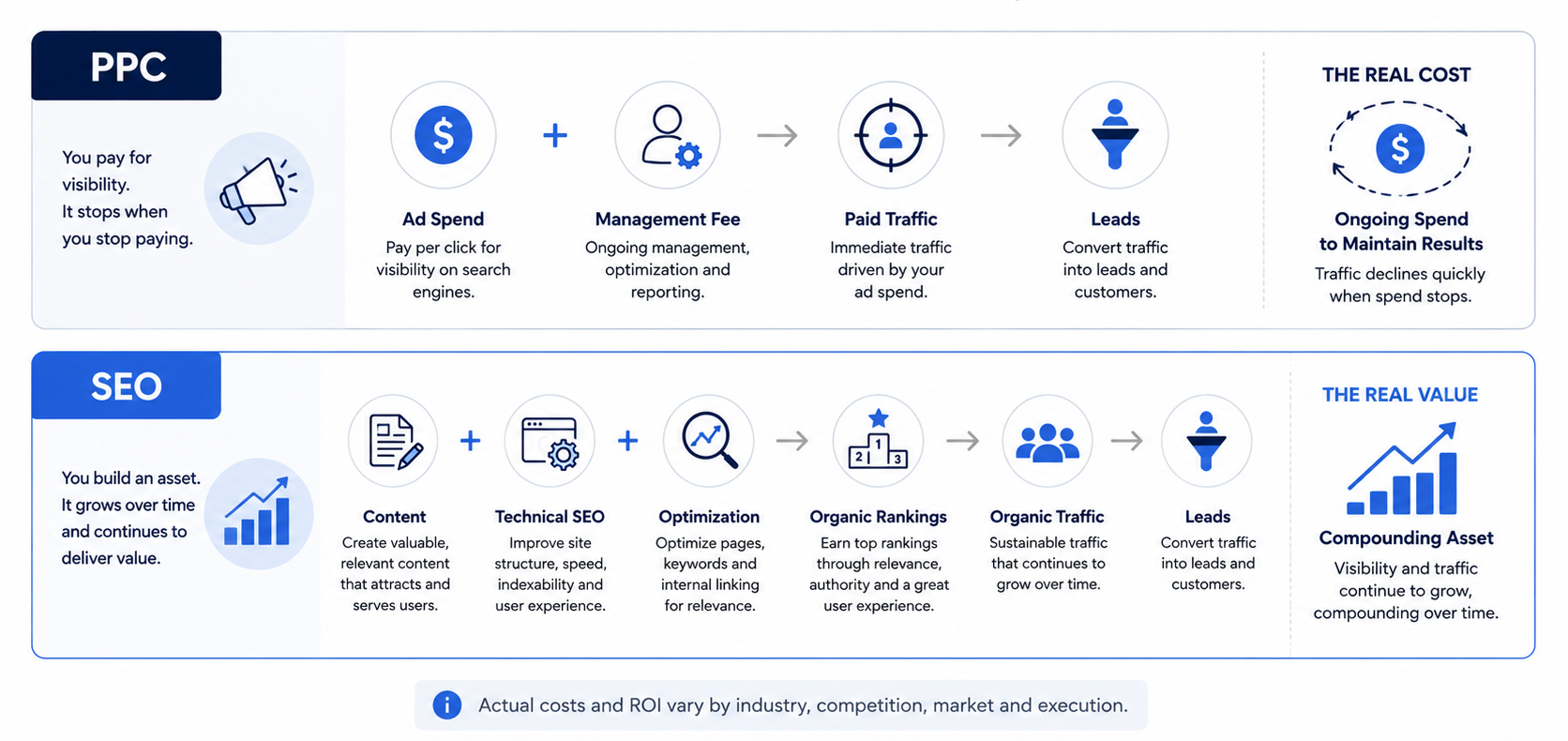 A fair cost comparison has to include more than just the number on the invoice.
PPC cost = your ad spend + a management fee (if using an agency). Both parts should be visible to you separately.
SEO cost is mostly labor, content creation, technical work, and ongoing optimization with no separate “ad spend” line. That makes a $1,000/month SEO retainer and a $1,000/month PPC budget very different investments: the PPC number is mostly going to Google, while the SEO number is entirely going to building something you keep.
Neither channel is inherently cheaper. PPC often costs more per lead in the first few months but starts producing results immediately. SEO usually costs less per lead once it matures, but takes time to get there, and that upfront period isn’t producing leads yet, which is a real cost if your business can’t absorb a slow start.
The Case for Doing Both (In Sequence)
Most businesses that grow past the early stage end up running SEO and PPC together, because they solve different problems:
- Phase 1: Use PPC to generate leads immediately and gather real keyword and conversion data.
- Phase 2: Use that data to prioritize which SEO content and pages to build first; you’re no longer guessing which keywords actually convert.
- Ongoing: Keep PPC running for immediate, controllable volume (especially around promotions or slow periods) while SEO builds toward a lower long-term cost per lead.
This is different from splitting a small budget evenly between both from day one, which is one of the more expensive mistakes small businesses make. A budget too thin to make either channel effective on its own usually means neither one works.
A Simple Decision Framework
Ask these three questions:
- Can my business survive 3-6 months without new leads from this channel? If no, start with PPC.
- Does my website already convert visitors reasonably well? If no, fix that before spending on either channel, but especially before PPC.
- Are my competitors already dominating organic search in my category? If yes, the gap only grows the longer SEO is delayed; that’s a reason to start building now, even if PPC is also running in parallel for immediate leads.
Frequently Asked Questions
Is SEO or PPC better for a brand-new business? PPC is usually the more practical starting point for a brand-new business, since there’s no existing content or domain authority to rank organically yet. Start building SEO in parallel so it’s compounding by the time you want to reduce ad spend.
Can I run SEO and PPC at the same time? Yes, and for most established businesses it’s the better long-term approach. PPC covers immediate, controllable volume while SEO builds toward a lower cost per lead over time.
Which one gives a better return on investment? It depends on your timeline. PPC’s ROI is easier to measure immediately, since every click and conversion is tracked. SEO’s ROI tends to improve the longer a page ranks, since the traffic keeps arriving without repeated ad spend.
Does stopping PPC hurt my SEO rankings? No, organic rankings and paid ads are ranked completely independently by Google. Pausing a PPC campaign has no direct effect on your organic search position.
Not sure which channel fits your business right now? Contact us; we’ll look at your website, budget, and goals and tell you honestly where to start, whether that’s SEO, PPC, or both.